Last weekend, I was up in Oregon visiting my college-aged daughter. While at the Bed and Breakfast, (ah, bliss! A lovely hotel room all to myself!) I came across the book Travels with Charley by John Steinbeck.
Steinbeck is a hit and miss author for me. Loved some of his work but not all. Travels with Charley, though, is a hit.
In 1960, when he was almost 60 years old, Steinbeck set out to rediscover America. He was accompanied only by his French poodle named Charley, and he traveled the length and breadth of the country. One adventure after another. All true!
Loved this paragraph in particular:
For weeks I had studied maps, large-scale and small, but maps are not reality at all--they can be tyrants. I know people who are so immersed in road maps that they never see the countryside they pass through. Suddenly, the United States became huge beyond belief and impossible ever to cross. I wondered how I'd got myself mixed up in a project that couldn't be carried out.  [Here's the part I like...] It was like starting to write a novel. When I face the desolate impossibility of writing five hundred pages a sick sense of failure falls on me and I know I can never do it. This happens every time. Then gradually I write one page and then another. One day's work is all I can permit myself to contemplate and I eliminate the possibility of ever finishing.
This last weekend, while in my delightful B&B, I finished up the notes and groundwork for a novella that is due September 1st. Steinbeck's words spoke to me!
And now...I better get busy...
Tuesday, April 27, 2010
Travels with Charley
Tuesday, February 3, 2009
Advice from John Steinbeck for Beginning Writers
John Steinbeck is a local hero in my area. I came across this letter he wrote and thought it would fit in Grit's theme:
"I have written a great many stories and I still don't know how to go about it except to write it and take my chances..."
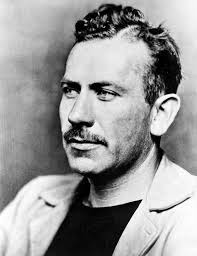
Dear Writer:
Although it must be a thousand years ago that I sat in a class in story writing at Stanford, I remember the experience very clearly. I was bright-eyes and bushy-brained and prepared to absorb the secret formula for writing good short stories, even great short stories. This illusion was canceled very quickly. The only way to write a good short story, we were told, is to write a good short story. Only after it is written can it be taken apart to see how it was done. It is a most difficult form, as we were told, and the proof lies in how very few great short stories there are in the world.
The basic rule given us was simple and heartbreaking. A story to be effective had to convey something from the writer to the reader, and the power of its offering was the measure of its excellence. Outside of that, there were no rules. A story could be about anything and could use any means and any technique at all - so long as it was effective. As a subhead to this rule, it seemed to be necessary for the writer to know what he wanted to say, in short, what he was talking about. As an exercise we were to try reducing the meat of our story to one sentence, for only then could we know it well enough to enlarge it to three- or six- or ten-thousand words. 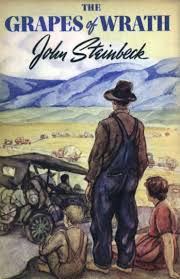
So there went the magic formula, the secret ingredient. With no more than that, we were set on the desolate, lonely path of the writer. And we must have turned in some abysmally bad stories. If I had expected to be discovered in a full bloom of excellence, the grades given my efforts quickly disillusioned me. And if I felt unjustly criticized, the judgments of editors for many years afterward upheld my teacher's side, not mine. The low grades on my college stories were echoed in the rejection slips, in the hundreds of rejection slips.
It seemed unfair. I could read a fine story and could even know how it was done. Why could I not then do it myself? Well, I couldn't, and maybe it's because no two stories dare be alike. Over the years I have written a great many stories and I still don't know how to go about it except to write it and take my chances. 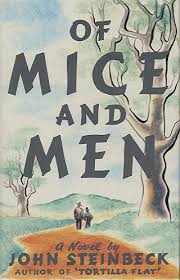
If there is a magic in story writing, and I am convinced there is, no one has ever been able to reduce it to a recipe that can be passed from one person to another. The formula seems to lie solely in the aching urge of the writer to convey something he feels important to the reader. If the writer has that urge, he may sometimes, but by no means always, find the way to do it. You must perceive the excellence that makes a good story good or the errors that makes a bad story. For a bad story is only an ineffective story.
It is not so very hard to judge a story after it is written, but, after many years, to start a story still scares me to death. I will go so far as to say that the writer who not scared is happily unaware of the remote and tantalizing majesty of the medium. 
I remember one last piece of advice given me. It was during the exuberance of the rich and frantic '20s, and I was going out into that world to try and to be a writer.
I was told, "It's going to take a long time, and you haven't got any money. Maybe it would be better if you could go to Europe."
"Why?" I asked.
"Because in Europe poverty is a misfortune, but in America it is shameful. I wonder whether or not you can stand the shame of being poor." 
It wasn't too long afterward that the depression came. Then everyone was poor and it was no shame anymore. And so I will never know whether or not I could have stood it. But surely my teacher was right about one thing. It took a long time - a very long time. And it is still going on, and it has never got easier.
She told me it wouldn't.
Source


