Welcome, Cheri, to Grit for the Oyster!
Can you give us a little bit of information about your publishing history?
I began writing in 2000 after a 15 year career in youth and children’s ministry. After a rocky start (my first contract was withdrawn, leaving me to question this calling), I decided to become a magazine writer expert. I figured rejection would hurt less with articles. I now realize God had given me a taste of success which would fuel me as I learned the publishing lay-of-the-land. Then, seven years later I was ready and He fulfilled my heart’s desire for a book.
When in the process of writing your book did you begin to look for a publisher?
I began with that dream, but tucked it away when the contract was withdrawn.
What struggles have you had on the road to being published?
I’ve already mentioned the contract issue, but more importantly, I’ve struggled with my own self-talk. I needed those seven years to really believe I had what it takes to carry the message- in a book and in my speaking.
What has been the best part about being published?
Hearing from readers that what you wrote helped them through a difficult time. On the funny side, it tickles me when I say to people I have a book published and when they ask with whom and I say “Beacon Hill” their eyes get big. Then I say, “Yes, I know, I did it the hard way.”
Will you share with us how you come up with ideas for your books?
My first book is about an issue I struggled with for years- knowing God’s will, or more to the point, how to discern God’s will. My second book (I’m awaiting a contract offer) came about because of my love of the Church and my heartache for those who view her as irrelevant. I believe we need to have passion for the subjects we write about.
Do you plan your stories first with an outline or does it come to you as write it?
LOL, all writers must begin with a skeleton outline as publishers need to know where we are going and if we have enough “there” for a book. However, there is a big difference between this sort of an outline and a detailed outline. When I was writing this book, I had fallen a bit behind and was fearful I’d not meet my deadline- a big mistake. So, I decided to try my hand at a detailed outline. I spent two days working on this outline- two days from writing. I then set about to write that chapter. Well, it didn’t take long before I was no where near my outline, but I liked what God and I were doing so I kept on writing. My chapter didn’t look anything like my outline, but I was happy with the end product. (I did meet my deadline after all.)
What do you want readers to remember and carry with them after reading your book?
That decision-making God’s Way is about a process; it’s not a hidden will we are to find. God loves us so much more than that. He wants you to grow in relationship with Him so much so that your will and His are the same. The six-question process my book reveals is a means for developing that intimate relationship.
What are your dreams for your writing?
I am blessed to be attending Asbury Theological Seminary where I’m earning a Masters in Theological Studies. My goal is to take the wonderful things I’m learning and translate that for the building up of the body of Christ.
What is the most valuable piece of advice you have been given/learned in your life as a writer?
Seek to serve and not to be served; writers write everyday; writers are readers; and the more you learn the more you know how much you need to learn.
What do you wish you had known when you first started out as a writer for publication?
That the writing journey is just that- a journey and the relationships you begin when you first start out are ones you’ll carry with you for life. Therefore, every person you meet is worthy of your time and attention.
Has it been a bumpy ride to becoming a published author or has it been pretty well smooth sailing?
In some ways it was bumpy, and at the time it felt downright pot-holed. But looking back I can see how I was saved from the monster of defeat. That monster steals more dreams than rocky roads.
For this particular book, how long did it take from the time you signed the contract to its release?
I was an unusual case. It was 13 months. My publisher had an opening in their pub schedule and asked if I could meet their deadlines. If I could I had a contract. “Of course,” was my answer.
Do you have an agent and, if so, would you mind sharing who he/she is? If not, have you ever had an agent or do you even feel it’s necessary to have one?
My agent is Les Stobbe, a giant in the publishing industry. I got him by accident; I wasn’t looking for an agent. I had a proposal I couldn’t get interest in and so I submitted it at a writers’ conference to be examined by an expert. Les was the expert who received my proposal and he like it and offered me a contract.
If money was no object, what would be the first thing you would invest in to promote your book?
A publicist. I received a scholarship for a six-month contract with Kathy Carlton Willis. She has been a blessing. I’ve tripled my output working with her and will find a way to hire her for the next book release.
How important do you think self-promotion is and in what ways have you been promoting your book offline and online?
I planned and executed my own book tour, speaking in churches and doing book-signings. I increased my speaking to promote the book, and I’ve written numerous articles tying themes from the book to current events.
Where can readers find a copy of your book?
My website Direction and Discernment, Amazon.com, Christianbook.com, and your local Christian bookstores.
Thank you very much for stopping by our blog. We wish you great success, Cheri!
Friday, February 13, 2009
Friday Feature: Author Cheri Cowell

Thursday, February 12, 2009
Writing Day
I was informed last week by the powers that rule my work-life that all meetings scheduled for today were going to (Unfortunately. Haha, if only they knew.) be canceled. There are a lot of things I could do with a suddenly free day, but I determined to set aside Thursday, February 12, 2009 as a writing day. I planned to sit at my computer for at least four hours and write.
Of course, I needed a project. (On Tuesday, I sent a requested project to Discipleship Journal. --Please pray that they love it.--So it's time for a new project.)
Last night, I made a list of possible writing projects and determined that today I would write. I would not give in to writer's block or writer's inadequacy that usually plague me. I would write and write and write.
At 7:45 AM my daughter left for school, I poured myself a cup of coffee and approached the computer.
At 7:46AM the lights flickered and flickered and went out. When I called to report the outage, I learned that due to high winds power lines everywhere were falling. I faced a powerless day.
Only a fellow writer can understand the self-control that I had to exercise not to tantrum excessively. Well, actually not self-control, but prayer--fervent prayer. And God graced me with a better attitude. I found a pen and some lined paper and started to scrawl. An hour later the lights came back on and now I can write...
How would you spend a writing day?
Wednesday, February 11, 2009
Ten juicy tidbits I took away from the Space Coast Writers Conference (the following info came directly from a New York literary agent):
1. "Lists" come out twice yearly
Front list: Big tour authors; current best-sellers
Mid-List: Most new books, more experimental or from new authors
Back-List: Evergreen or perennial books that plod along year after year
2. Many mid-list authors barely sell enough copies for publishers to offer them another book; the mid-list is shrinking and instead of adding more authors to the list, new authors are replacing older authors.
3. Among literary agents, what used to be termed "platform" is now called "content" (means an author's means of getting his/her name before the public).
4. "Traction" means the sales numbers that larger publishing houses look at when presented with a self-published or small press book that is doing well. Purchase of these books is not exactly commonplace, but it does happen; called "self to shelf."
5. Book titles and plots/ideas can't be copyrighted but song titles and lyrics can. Be sure to do your legal homework in the use of registered or trademarked products.
6. What literary agents look for:
A. How prepared is the author to apply for the job of "Book Author"? What is his/her strategy? Marketing plan? How does he/she plan to help? (Promo is now more the writer's job than ever before and publishers expect them to get out there and get their hands dirty.)
B. Is there a good answer to the old Max Perkins (the agent who discovered Hemingway)question: "Why does the world need this book?"
C. Does the book have a good prognosis? Will the topic sell in the projected market two years from now? (The average time from contract to press is 1-3 years.)
D. "Perfect pitch" - the query must elicit sparks and stand out above the rest. Key words to include are "fresh" and "new."
7. Agents make their decisions based on page one of your query; sometimes paragraph one. Don't overwhelm them with multiple pages and start with an irresistible hook.
8. "Querial killers" (rookie mistakes in queries):
A. Ignoring "show, don't tell"
B. Not including these crucial elements: Protaganist, Setting, Problem, Take-Away (take-away must be significant and memorable; must connect with targeted readers).
C. Author expecting to sit back and let the publisher sell the book.
9. "Acq.Ed" (pronounced "Ack Ed"): Acquisitions Editorial meetings are usually held weekly at publishing houses to discuss/discard/choose new projects. Agents are often invited in the later stages; Agents consider themselves "midwives" in delivering new books, or matchmakers between publishers and authors.
10. Book titles are VERY important; current trend is for buyers from major book sellers to be queried for title suggestions (because of their fingers on the pulse of the public). Titles must grab the eyeballs of readers from first glance on; new trend is shorter titles for fiction and non-fiction, with longer non-fiction subtitles explaining the specific topic of the book.
Parting quote: "All the sensitivity in publishing can fit in a gnat's navel."
Tuesday, February 10, 2009
Battlescars
Have you received any rather rude rejection letters lately? If so...don't take them too personally. Suffering a few battlescars is part of being a writer. The following are excerpts from rejection letters sent from publishers to authors...
Jorge Luis Borges
'utterly untranslatable'
Isaac Bashevis Singer
'It's Poland and the rich Jews again.'
Anais Nin
'There is no commercial advantage in acquiring her, and, in my opinion, no artistic.'
Jack Kerouac
'His frenetic and scrambled prose perfectly express the feverish travels of the Beat Generation. But is that enough? I don't think so.'
Lady Chatterley's Lover by D H Lawrence
'for your own sake do not publish this book.'
The Wind in the Willows by Kenneth Grahame
'an irresponsible holiday story'
Lord of the Flies by William Golding
'an absurd and uninteresting fantasy which was rubbish and dull.'
Watership Down by Richard Adams
'older children wouldn't like it because its language was too difficult.'
On Sylvia Plath
'There certainly isn't enough genuine talent for us to take notice.'
Crash by J G Ballard
‘The author of this book is beyond psychiatric help.'
The Deer Park by Norman Mailer
'This will set publishing back 25 years.'
Gentlemen Prefer Blondes by Anita Loos
'Do you realize, young woman, that you're the first American writer ever to poke fun at sex.'
The Diary of Anne Frank
‘The girl doesn’t, it seems to me, have a special perception or feeling which would lift that book above the “curiosity” level.’
Lust for Life by Irving Stone
(which was rejected 16 times, but found a publisher and went on to sell about 25 million copies)
‘ A long, dull novel about an artist.’
Barchester Towers by Anthony Trollope
'The grand defect of the work, I think, as a work of art is the low-mindedness and vulgarity of the chief actors. There is hardly a lady" or "gentleman" amongst them.'
Carrie by Stephen King
'We are not interested in science fiction which deals with negative utopias. They do not sell.'
Catch – 22 by Joseph Heller
‘I haven’t really the foggiest idea about what the man is trying to say… Apparently the author intends it to be funny – possibly even satire – but it is really not funny on any intellectual level … From your long publishing experience you will know that it is less disastrous to turn down a work of genius than to turn down talented mediocrities.’
The Spy who Came in from the Cold by John le Carré
‘You’re welcome to le Carré – he hasn’t got any future.’
Animal Farm by George Orwell
‘It is impossible to sell animal stories in the USA’
Lady Windermere’s Fan by Oscar Wilde
‘My dear sir,
I have read your manuscript. Oh, my dear sir.’
Lolita by Vladimir Nabokov
‘... overwhelmingly nauseating, even to an enlightened Freudian … the whole thing is an unsure cross between hideous reality and improbable fantasy. It often becomes a wild neurotic daydream … I recommend that it be buried under a stone for a thousand years.’
Source: Writer's Services.
Thursday, February 5, 2009
Write
Our daughter Carolyn turned 16 last week and decided she's old enough for a part-time job. She's been visiting restaurants and filling out applications. She recently applied at a restaurant her older brother was fired from a few years ago.
Later that day at the dinner table she mentioned to him that she'd applied there and he said, "EEWH, I hope I didn't wreck your chances of ever getting hired there. If I did, I'm sorry."
I was happy that he'd matured enough to be sorry.
My husband Steve didn't think that was enough and said, "Matt, I wish you'd write a letter to the owner apologizing for your actions."
An uncomfortable silence clogged our dinner conversation (this is a good place for a strong metaphor and if I wasn't blogging, I'd star this section and come back to it in a few days.)
After a few awkward moments, Matt said, "Well, Dad, I bet you have a few letters of your own to write."
More uncomfortable silence. To my credit, I didn't start listing people Steve could write. And after a minute, I recalled a line from one of my favorite movies. "Everybody has to write their own letters," I said quoting a line from "Changing Lanes" and attempting to shift the conversation to a less stifling topic.
************************************
I love memorable lines like that. Some day, I want to write a novel that's full of them. But right now all my novel ideas are unfinished drafts on my computer.
It's so hard for me to devote substantial time to my novel ideas because I'm afraid the finished product won't meet my expectations.
I was speaking with a friend at work about my hesitations. She said, "It's better to do it imperfectly than not to do it at all."
Another good line. I think I'll make it my new writing motto.
Wednesday, February 4, 2009
Writing how-to Snippets
A few choice tidbits gleaned from New York publishing house editors and several successful authors at a recent writers conference:
1. Trend for today's successful novels: third person POV.
2. Build rapport with characters before you kill them off (which can be a problem if you start with a murder in the first chapter).
3. Insert the threat of danger rather than danger itself to keep suspense high.
4. Common "early writer" mistake: resolving conflict before the end of the book without introducing a related conflict.
5. Developing a 20-second "elevator pitch" about your project is a MUST. Use it as promotion in conversations everywhere (you won't be considered a bore if you keep it brief and people won't roll their eyes when they see you coming).
6. Include an unexpected change in each scene.
7. Nothing will kill a story worse than an extemporaneous scene (a scene added to explain the story line).
More later...
Tuesday, February 3, 2009
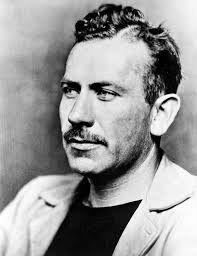
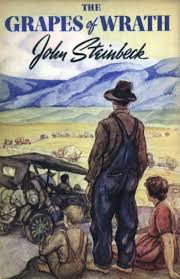
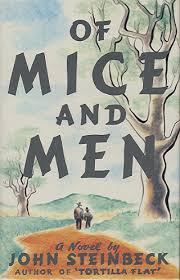
Advice from John Steinbeck for Beginning Writers
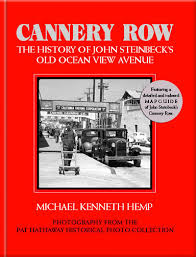
John Steinbeck is a local hero in my area. I came across this letter he wrote and thought it would fit in Grit's theme:
"I have written a great many stories and I still don't know how to go about it except to write it and take my chances..."
Dear Writer:
Although it must be a thousand years ago that I sat in a class in story writing at Stanford, I remember the experience very clearly. I was bright-eyes and bushy-brained and prepared to absorb the secret formula for writing good short stories, even great short stories. This illusion was canceled very quickly. The only way to write a good short story, we were told, is to write a good short story. Only after it is written can it be taken apart to see how it was done. It is a most difficult form, as we were told, and the proof lies in how very few great short stories there are in the world.
The basic rule given us was simple and heartbreaking. A story to be effective had to convey something from the writer to the reader, and the power of its offering was the measure of its excellence. Outside of that, there were no rules. A story could be about anything and could use any means and any technique at all - so long as it was effective. As a subhead to this rule, it seemed to be necessary for the writer to know what he wanted to say, in short, what he was talking about. As an exercise we were to try reducing the meat of our story to one sentence, for only then could we know it well enough to enlarge it to three- or six- or ten-thousand words.
So there went the magic formula, the secret ingredient. With no more than that, we were set on the desolate, lonely path of the writer. And we must have turned in some abysmally bad stories. If I had expected to be discovered in a full bloom of excellence, the grades given my efforts quickly disillusioned me. And if I felt unjustly criticized, the judgments of editors for many years afterward upheld my teacher's side, not mine. The low grades on my college stories were echoed in the rejection slips, in the hundreds of rejection slips.
It seemed unfair. I could read a fine story and could even know how it was done. Why could I not then do it myself? Well, I couldn't, and maybe it's because no two stories dare be alike. Over the years I have written a great many stories and I still don't know how to go about it except to write it and take my chances.
If there is a magic in story writing, and I am convinced there is, no one has ever been able to reduce it to a recipe that can be passed from one person to another. The formula seems to lie solely in the aching urge of the writer to convey something he feels important to the reader. If the writer has that urge, he may sometimes, but by no means always, find the way to do it. You must perceive the excellence that makes a good story good or the errors that makes a bad story. For a bad story is only an ineffective story.
It is not so very hard to judge a story after it is written, but, after many years, to start a story still scares me to death. I will go so far as to say that the writer who not scared is happily unaware of the remote and tantalizing majesty of the medium.
I remember one last piece of advice given me. It was during the exuberance of the rich and frantic '20s, and I was going out into that world to try and to be a writer.
I was told, "It's going to take a long time, and you haven't got any money. Maybe it would be better if you could go to Europe."
"Why?" I asked.
"Because in Europe poverty is a misfortune, but in America it is shameful. I wonder whether or not you can stand the shame of being poor."
It wasn't too long afterward that the depression came. Then everyone was poor and it was no shame anymore. And so I will never know whether or not I could have stood it. But surely my teacher was right about one thing. It took a long time - a very long time. And it is still going on, and it has never got easier.
She told me it wouldn't.
Source